Posted in Tips and Ideas

How To Build An Emotional Bond With The Most Demanding Clients, Hotel Guests

Imagine walking into a fresh hotel room after a long flight; dropping your luggage, collapsing onto the bed before noticing your favourite magazine resting on the table out of the corner of your eye. Seated next to it is a welcome letter addressed to yourself and an iPad tailored toward local services (yes, food delivery!). On the wall, there’s a television with Netflix open and beneath it a selection of complimentary snacks.

Personalization fuels hotel stays in the modern era, and the experience is forever vital. The best hotels go beyond expectations in order to make the best of a guest’s visit. The little, unexpected things boost the overall experience; adding a unique element and helping to build a relationship with guests. In spite of the above, statistics show that hotels have consistently performed poorly in creating an emotional bond with their clients. MBLM conducted research regarding brand intimacy within the hospitality industry and found hotels are failing to build brand intimacy with their customers.

Why is this happening when the tools are readily available? In the era of abundance, hotels providing efficient customer service, competitive prices and luxurious amenities simply isn’t enough anymore. We want more. And we expect more: the newest technology, personal service and amenities customized to our preferences.

Customization is the key to building an emotional bond with the most demanding clients

Let’s face it. We, the clients of the hospitality industry, are exceptionally demanding. We have high expectations and if the hotel doesn’t go beyond them, we often feel disappointed. We don’t expect to encounter bad service, dirty rooms, poor breakfast or bed bugs in hotels. And if we do, it has a wide impact on our emotional bond with the hotel in question. Negative feelings like disappointment, anxiety, stress or fear aren’t exactly the emotions we expect to encounter during our stay, but they are the ones that remain most prevalent, especially when it comes to where we sleep.

For small hotels, it’s easier to create these unforgettable moments that make the emotional bond stronger. For instance, writing a personalized letter to 30 guests is a smaller task than writing it for 300. Tracking (and fulfilling!) 30 guests’ preferences is possible but 300 would need an entire team to work on it full time.

Let the technology help you

According to Deloitte’s travel and hospitality industry outlook, new technologies such as AI, machine learning and IoT have the potential to create personalized moments that matter and bring joy to a travel experience. Completely automated solutions like an intelligent thermostat, autonomous bed bug prevention system, or smart door lock all have an impact on the guest experience. Guests will remember those features that made their stay unique and carry those memories with them.

IoT solutions autonomously improve guest experience through streamlining resources, the most important of which is time. Human interaction is critical when building emotional bonds: so why wouldn’t you let your staff concentrate in serving customers? Trivial tasks such as manually fixing room temperature or inspecting bugs take a lot of time. There are many amenities that can be automated to make guests’ stay more pleasant and unique whilst positively impacting the hotels daily duties.

Ultimately, hotels can create moments beyond expectation that travelers will remember and share. When hotels succeed in creating these unforgettable yet simple moments people will spread the word. Sharing the perfect gluten-free breakfast on Instagram is more likely when it’s made specifically for you.

Personalization drives positivity. And that’s what we want when we pay to make a hotel room our home for a couple of days. The data is here to be used. A developed understanding of customer types allows for a tailored customer experience to be successfully implemented with little if any pitfalls. No hotel can please every guest, but a hotel can please the majority through customization, and so comes the strong emotional bond.

If you are in search of best hotel mobile app, then please contact us in comment section and get answers of your questions.

Posted in Tips and Ideas

5 Technologies Which Can Make Your Hotel Better For You & Your Guests

In today’s digital era it’s paramount to take advantage of technologies out there, there are endless opportunities to use it to improve your customers’ experience, which will help make you stand out amongst the rest. So, what are the technologies you can utilise to make your hotel a better experience from start to end, and even after they are gone?

Simple, we have compiled 5 (simple and advanced) ways technology can make your hotel better for your guests.

With each guest being unique, with certain preferences, behaviours etc. being able to cater to their exact likes, personalising their experience and going above the high expectations of customers, will take your hotel to the next level.

1. Provide Mobile Check-ins

Mobile check-in integration is a great example of technology that can improve guest experience for your guests during their stay at your hotel. The last thing your guests want to do after travelling miles to your hotel (sometimes for hours) is to then stand in a queue, with their bags, waiting to check-in at reception.

Even if there is not a queue at your hotel, some people will have a preference for less interaction in their weekend away and may prefer to check in online. Others who like to be personally met face to face by a receptionist still can be. The point here is that you are giving people the option to choose based on their preferences.

Statistics from Statista show that 51% of 18-24 year-olds would prefer to choose a hotel with check-in facilities via smartphone.

Having a mobile check-in option means that guests can check-in before arriving at your hotel, making the whole process more convenient and less time consuming for your guests. Moreover, this will still improve the check-in process for guests that prefer to check-in on arrival at your hotel as they will consequently have shorter queues.

Result = speed, efficiency and the freedom of choice

2. Bluetooth Beacons

A Bluetooth beacon is a device that can benefit both your guests and your hotel. A beacon is a Bluetooth-enabled device that can exchange data to nearby portable electronic devices. The device enables smartphones, tablets and other devices to perform actions when near it.

This makes tracking guest preferences easier for you and beneficial for your guests, as you can place multiple devices around your hotel for specific facilities. For example, you could place beacons in your lobby, spa, gym, restaurant & bar so that when a guest visits those areas, a specific offer alerts their device such as ‘10% off spa treatments during your stay’.

Your guests would need to initially connect with the Bluetooth device, usually through an online app (in which they can check in online also) so that the beacons can pick up their device when near.

Result = understand your customers better, engage them with timely offers

3. Online Experience

Gift Pro is a great example of a technology that can be used to not only improve the online experience when people choose to visit your website but in parallel increase revenue to the hotel. GiftPro is a great online tool in the market, it’s customisable and a really user-friendly way for hotels to manage and sell gift vouchers.

This technology makes the experience for your visitors seamless, efficient and enjoyable.

Some hotels still think the customer experience starts when they enter the building, this is no longer the case in the digital world we live in. The experience starts the moment they find you online, from when they engage with your website and even after they leave when they decide to purchase a gift online for a friend.

The customer experience exists outside the realms of the hotel itself, the digital experience is just as important as the rest.

Result = heighten the customer experience online, not just offline

4. Loyalty Programmes & Memberships

Loyalty programmes and memberships are great for increasing customer loyalty, as suggested by its name.

These schemes are already widely used, however, the majority of the people don’t actively engage with them as they aren’t timely, relevant or executed well.

Imagine that a family visits the hotel. The hotel has partnerships in place with local salons, activity centres and local businesses, which only heightens the customers’ experience during their stay. The family receives an email or Rich SMS on arrival at the hotel as part of the loyalty programme, which gives them ideas of the top 10 places to visit in the local area. Along with this is a digital coupon 20% for all the activities mentioned in the list and a coupon for kids go free.

Loyalty programmes and memberships integrated online can help your hotel find out your guests’ preferences, meaning that personalised rewards can be created. Rewards based on your preferences are far more likely to be used than an average discount. In return, guests will have a far more positive guest experience and will likely engage more with your loyalty programmes and memberships.

Result = engage your guests with personalised ideas that they will thank you for

5. Internet of Things

The Internet of Things (IoT) is a network of physical devices that allows the user to control any powered devices (that are connected to it) e.g. light bulbs, thermostats, heaters.

This technology is usually used for hotel staff in order to cut down on costs and become more environmentally friendly, e.g. this technology can let you know if a guest has left lights on or left the mini bar open etc.

This technology can also be useful for guests staying at your hotel. A great example is guests being able to control the temperature using the IoT technology; if it’s a cold night and they’re out all day, they can increase the temperature of their room from their device before they arrive, ensuring that the room has already warmed up before their arrival.

Result = add an unexpected touch to customers high expectations

Personalise Your Guests’ Experience

We hope this article has given you insight into the ways that technology can make your hotel better for your guests with personalisation and how you can adopt these ideas into your own digital marketing strategy.

If you are in search of best concierge app then please contact us and know more details about it.

Posted in Tips and Ideas

Managing Your Hotel’s Reputation: A Quick & Dirty Guide

A company’s success has always depended on its reputation. And when it comes to reputation, word of mouth has always been the coin of the realm. But in the digital age, word of mouth is virtual. This presents hotels and other businesses in the service industry with both a problem and a solution.

Winds of Change

The problem is that customer reviews circulate instantly and pile up in mind-boggling quantities. This makes it challenging for the brands being reviewed to get out in front of the tidal wave of mixed opinions about their services.

But the very same tools that make it easy for customers to get the word out about your brand make it possible for you to shape the conversation in ways that boost your visibility and value.

Here are some quick and dirty tips for taking the bull by the horns.

Reputation Matters

Virtually all industries these days are impacted by web chatter, and therefore need to take steps to manage their reputation. This is especially true of the hospitality industry.

Hospitality customers make their views about brands and properties known across a wide range of review sites like Yelp and TripAdvisor, search engines, and social channels.  

TripAdvisor reports that more than 9 in 10 hotel customers use online reviews in making their selection, and over half of those they surveyed would not stay in a hotel for which there are no online user reviews. Crucially, TripAdvisor also finds that travelers rank reviews second only to price in the list of factors that affect their decision about where to stay.

As for social platforms, every month over 8 in 10 customers discover more new brands and services via social channels than from other sources.

And research into Google search activity shows that this activity has a measurable impact on revenue. Nearly 7 in 10 customers report that half or more of their local searches result in a visit to a business. And sales result from at least half of the searches done by most customers.

Manage Your Reputation

Given this data, there’s little doubt that online reviews can powerfully drive business success. Here are a few tips for managing the online reputation of your hotel.

Own the optics. Your business probably already has a listing on review sites like Yelp or TripAdvisor. That’s a key promotional resource you can manage to your advantage, but you’ve got to take ownership of it first.

Claim your listing and exercise more control over the narrative. Stock the page with useful information to help drive web traffic to your site and social pages.

Tighten up the image. Make sure the photos of your property that travelers are seeing are high-quality and present your facilities and services in the best possible light.

And remember that the mere fact of having any photos at all improves your chances of receiving booking inquiries by a whopping 225%.

Gather data. It pays to use management tools like the Net Promoter Score and System (NPS) to measure customer loyalty and satisfaction. A simple survey question that asks a customer to rate their satisfaction and likelihood of recommending your hotel can help you take the temperature.

Folks who give you high marks can be asked to provide a review and those who express dissatisfaction can be asked to elaborate on their concerns. Following up in this way can itself help boost trust and promote your reputation for caring about how well you’re doing.

Be responsive. Perhaps the most direct and impactful way to demonstrate that your business cares about how well it’s doing is to reach out where folks gather online and do precisely that. That means following-up and engaging around feedback shared by customers on social platforms and review sites.

Yet another TripAdvisor study shows a clear connection between responsiveness and business performance, with a business’s overall ratings improving in proportion to its rate of response to reviews and online user feedback.

Hotel reputation management is no longer a “nice to have,” but a “need to have.” Once a helpful accessory to traditional advertising, it’s now a key ingredient in any competitive hotel’s successful revenue strategy. “Power to the people” is today’s marketing mantra. Armed with some of the facts and tips we’ve reviewed here, your hotel can ally with the people you rely upon and launch a win-win campaign.

A concierge service app is a software product which serves as a personal assistant app in hospitality industries if you want to know more details please contact us.

Posted in Tips and Ideas

What it Takes to Provide a 5-Star Customer Experience in the Hospitality Industry

After working with dozens of leading hotels, I’ve found that there is one thing that most successful hospitality brands have in common. They all provide a top-notch customer experience.

Even if the hotel isn’t a luxury hotel, they offer a five-star experience that guests will thoroughly enjoy and never forget.

It’s this focus on customer experience that allows successful hotels to attract new guests and build lasting relationships with former guests who will never even think about staying at a competitor’s hotel.

Customer Experience is Synonymous with Hospitality

It should be no surprise that customer experience is a defining characteristic of successful hotels. Customer experience is what the hospitality industry is all about.

As consumers, we are savvy shoppers with hundreds of choices. We look for and demand the best, especially when it comes to choosing where we will sleep, vacation, and take our families.

When looking for a vacation or business stay, I look at what that property will offer me and how comfortable I will feel staying there. Hotels need to make a memorable impression for guests to first choose that property and then come back time and time again.  

How to Make Memorable Guest Experiences

When customers walk into a top hotel and resort, they expect to find things designed to improve their experience. The property needs to be inviting and immaculate and give you that personalized service you expect at a luxury resort.

As they walk in the hotel lobby, guests need to feel a wow factor, while also feeling welcomed and comfortable. Easy check-in and a warm welcome are key.

The look and feel of the hotel must connect with guests from the moment the valet opens your car door to the reception staff smiling while offering you a bottle of water. It must continue on as you find specialty pillows and a personalized note in your room, and perhaps a phone call to see if you have everything you need. Oh, and a nice view can help! Nothing deflates the mood of having a gorgeous room faster than looking out the window to see a dirty garage roof.   

Keeping up With Changing Customer Experience Expectations

While some aspects of customer experience are timeless, customer expectations change over time. Brands need to keep up with changing customer desires and demands if they want to stay relevant in today’s highly competitive hospitality industry.  

Ten years ago, customer experience was about comfort and cleanliness. Guests were satisfied with basic and clean creature comforts.

But, these days you need to make an impression! Customers don’t want cookie-cutter cleanliness and comfort; they want character, technology, and affordability.

I believe the biggest difference is with millennials. Young adults are all about traveling the world. They want “inexpensive but cute.” I have three teenage daughters and when we look for a vacation spot, it’s all about the “pretty, homey feel.” The property needs to be edgy, but cozy.

To meet those standards, the hotel needs to be modern and fresh. It needs digital signage and accessible online information. Instead of being super lavish, the lobby should be modern with warm details like coffee and wine bars, small gathering spaces with pillows and comfy couches, and of course, complimentary WiFi.

Although hotels primarily cater to families and older generations (certainly these demographic groups are still an important focus for hotel brands with loyal followers), hotels should gather more ideas from millennials who are quickly stealing a major portion of marketers’ attention with their desire to see the world.

Social media is another key influencer in the millennial generation’s unique interest in traveling in the early stages of adulthood. Brands must have a strong social presence that exists both online and in their hotels through the use of on-site screens with social media feeds and streams of user-generated content.

In fact, digital signage throughout the property is also appealing to young adults who want to gather quick information about nearby dining hot spots, happy hours, specialty activities, and events throughout the property and city.

The Expensive Cost of Ignoring Customer Experience

Hotels that get stuck in the old way of designing customer experiences will likely get left behind.

Many hotels assume that a clean and comfortable room will do. Instead they need to think beyond the basics, get to know their customers better, and see what it will take to really wow them.

I encourage hotels that haven’t changed much in the past decade to survey their customers.

Find out what they want to see so you can improve your customer experience to better appeal to them. Would guests like late check-out? Is the view important? Do they need a wake-up call? Lately, I have even seen the higher-tier hotels offer a concert series that will take guests from the comfort of their stay to follow their favorite band wherever they play, from city to city.

In the hospitality industry, long-term customer satisfaction and loyalty is everything. It only takes one bad experience for customers to defect to competitors. So think outside-the-box to provide guests with an elevated customer experience they can’t find anywhere else.

A Brand Succeeding at Customer Experience

A brand that gets it right when it comes to customer experience is Starwood and Marriott Resorts. I am a loyal SPG rewards member, and one specific stay with them stands out in my mind.

Five years ago, I traveled with my family to Los Angeles for my niece’s wedding and we stayed at the W Hollywood. They not only treated me like royalty, but the manager also came out to greet my husband and me by name. They upgraded us to one of the largest suites I have ever seen overlooking the Hollywood sign and gorgeous mountain views. And, they offered us a discount for a second room for our daughters to stay in. We still tell friends about that experience.

It’s a perfect example of how paying extra attention to customer experience can get guests to rave about your hotel to family and friends, create memories that stick with them for years to come, and encourage visitors to return to your property again and again.

Do you want to know more details about hotel concierge app then please contact us in the comment section and get the answers of your questions.

Posted in Tips and Ideas

5 Ways To Make Your Hotel Stand Out

If you run a hotel business and have noticed a decrease in customers, there are various things that you can do to improve the overall look and aesthetic of your hotel. Here are five ways to make your hotel stand out so you can attract new customers to your business.

Social Media

With millions of users logging into social media platforms such as Facebook and Instagram each day, creating a business page for your hotel can be incredibly beneficial. Making your presence known on Facebook can make all the difference and bring new interest to your brand. What’s more, customers can get more of an insight into what your hotel is about, as well as leaving feedback. There will be a level of patience and consistency required on your part, as it will take time to build up a following on social media. There are a variety of tips that can help you when it comes to marketing your hotel on social media.

Refurbishing

If your hotel is looking dull and tired, it may be time for a refurb. Whether it’s minimal changes such as painting a hotel room or a complete transformation, only you will know what’s best for your hotel. The reception of a hotel is the first room that guests will see, so it’s important that you invest wisely in the look and feel of the room. You can install natural stone veneer fireplaces in your lobby to create a warm and cozy atmosphere. However, you go about it, you should have a budget in place that you can work with to avoid overspending.

Loyalty Programs

Customers want to feel valued and appreciated when becoming guests at your hotel. There are various ways that you can reward customers, such as by having a loyalty program in place. Consider using a tier program where members of your hotel can receive small rewards for joining. Not only will the incentive get them through the door, but it will also mean that they feel valued, keeping them loyal to your brand. Everyone likes a freebie, so make sure you offer promotional deals and discounts to lure new customers in.

SEO

You will want your customers to easily find your hotel when browsing online for a place to stay. Using SEO (search engine optimization) is a great way to build interest in your hotel, ensuring it appears at the top of search results. Make sure to use keywords that keep your hotel ahead of competitors, otherwise, you will find your establishment further down in the search results. Google AdWords can help you with this, helping you get in front of rivals to ensure your hotel is placed first.

Go Mobile

Customers love mobile-friendly sites and with 60 percent of mobile hotel bookings happening within 24 hours of a stay, it’s more important than ever to go mobile. Make sure that your hotel website is mobile and user-friendly so customers can easily navigate through your page when booking a stay. Various type of mobile app for hotel booking are available.

Whether you need to make your hotel’s presence known on social media, or a bit of refurbishing is on the cards, there are plenty of ways that you can inject a fresh and vibrant feel into your hotel, attracting new customers to your business.

Posted in Tips and Ideas

Are You Ready To Hand Over Your Pricing Strategy?

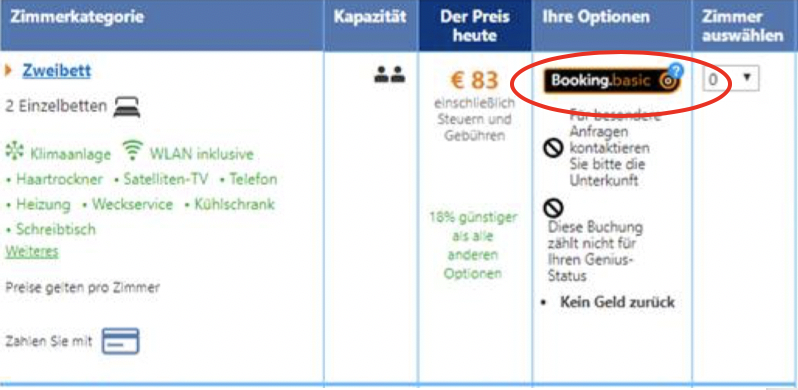
If you’re in any way involved in your hotel’s online distribution you’ve most likely come across Booking.com Basic by now. Through this programme, Booking.com pulls wholesaler rates to sell publicly on their platform. The programme is neither on an opt-in nor an opt-out basis – participation isn’t negotiable. The concept isn’t new, the likes of Amoma have been bothering hotels for years with this strategy. The difference is that on Booking.com it will have a significant impact on your hotel’s business.

Now, there is an obvious and easy way for hotels to avoid being pushed into the programme – to simply stop distributing static, opaque wholesaler rates. Might be easier said than done though if your hotel is dependent on that FIT business or even tied to a contract, but at least there is a way out.

The bigger concern: Early Payment Benefit

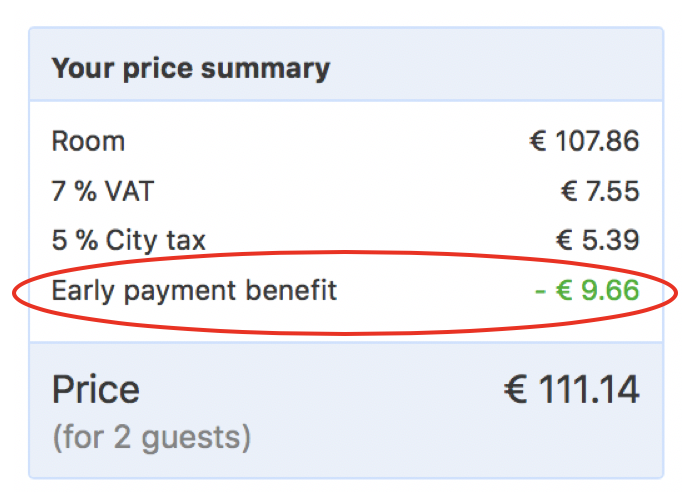
I would actually argue that the Early Payment Benefit (EPB) test that Booking.com is currently running in several major cities in Europe is much more concerning. With this initiative, Booking.com discounts the rates hotels send to them by taking part of their commission margin. In essence, Booking.com is now actively deciding what the price for a room should be. They have determined, that you, as a hotel, are no longer the one to decide how much a guest should pay for one of your rooms.

The critical difference to Booking.com Basic is that there is absolutely nothing you can do to prevent it from happening other than closing the channel completely. Static FIT rates being distributed all over the place were a kind of grey zone in terms of who’s to blame. For the EPB it is quite clear what is happening –

Booking.com is undercutting the rate you send them to offer a better deal to the guest.

Now once you raise this topic with Booking.com the response is (reactive, not proactive) that the there is no need to panic – the rate you’ve given them is also the one that you will receive e.g the hotel sends €100 to Booking.com, guest paid €90 but hotel receives €100.

For hoteliers with a short perspective there is indeed no need panic, but anyone with ambition to drive more direct bookings will know that this development is devastating for your hotel’s website contribution. In the last years OTAs have done a terrific job in terms of educating the public they get a cheaper price on an OTA than on a Hotel Website, despite that not being true most of the times. You don’t have to be a rocket scientist to figure out what will happen to your hotel website contribution when it is in fact true.

Why my hotel?

So why is this happening to my hotel? Well, Booking.com refers you to the Price Quality Score (PQS) screen on their extranet. Here, hotels are encouraged to provide “Fair Prices” to customers. If you are not fair, you will get a low score (and possibly penalized with an EPB discount).

It is not clear how the PQS is calculated and what is indeed fair prices. Arguably, it has something to do with rate parity. Taking our new independent hotel as an example: We distribute two rates, across 3 room types, on 3 channels. Everyone gets the same. There are no wholesaler contracts or opaque rates floating around anywhere and no sneaky discounts on OTA backends. In other words, it’s relatively straightforward (which is also the idea). I feel confident saying that our hotel probably provides some of the fairest pricing in northern Europe. As you may have guessed, our PQS is in the red.

What is fair?

So, we can conclude that Booking.com has a different definition than we do of what fair prices are. Now, in contrast to what Booking.com thinks, we like to think that we (the hotel) should still have some input on what our own product should be sold for. So we had to act. Through some research, we managed to find out what the discount pattern was of the EBP and consequently we are now matching that unfair (according to our definition) discount with a promotion set up on our other channels. That for us, seemed like fair pricing practice. Presumably, Booking.com won’t agree and it remains to be seen what impact this will have on our EQP. The good news is that we are almost at 0 now, so it really can’t get much worse.

The most troubling part of the EPB and Booking.com Basic is the message it sends to hoteliers – that you are no longer in charge of your own pricing. This, I think, will be hard to swallow for hotels, especially those, that have net revpar, book direct and advanced revenue management strategies in place.

It should be mentioned that Booking.com is not alone in pursuing this strategy. The Add On Advantage on Expedia and Coupon Discounts on Agoda are other programmes that undercut rates by cutting into their commission margin or sourcing third party rates. However, few will have an impact as signficant as Booking.com, at least in European markets.

I’d be keen to hear from the fanatics that were screaming for rate parity laws to be removed in the last few years. I am not sure if they considered that it obviously goes both ways, and we are now finding us in a situation where hotels have even less control of their pricing than ever before.

I’ve always said that I find Booking.com less partner and more (end) customer focused than for instance Expedia, and that that approach makes sense to a certain point. I am afraid though that Booking.com has crossed the line with these latest developments and may end up alienating many of its partners. The hotels that decide to accept Booking.com’s definition of fair and hand over their pricing strategy may want take a good look in the mirror and ask themselves: who’s actually in control?

Do you want to know more details about personal concierge app then please contact us in the comment section and get the answers of your questions.

Posted in Tips and Ideas

It’s Time To Focus On Your Mobile Website

With the unstoppable increase in mobile traffic, hotel marketers need to focus on the experience of guests visiting their website via smartphones. But is your mobile website ready to do its share when it comes to your direct bookings?

What we know about mobile

Hotelchamp data scientists frequently analyse trends and browsing habits amongst devices. Our data shows that Mobile sessions on hotel websites have exploded in the last two years: from 32% at the beginning of 2016, to 52% in August 2018. This means that visitors are now using Desktop and Tablet considerably less. In fact, data shows that mobile sessions have overtaken desktop and that tablet sessions have seen a particularly sharp drop.

But while travellers are increasingly researching accommodation on mobile, they aren’t concluding their bookings via mobile. Data analysts found that 68% of bookings were still made via desktop in August 2018, whilst mobile accounted for 21.8% of the bookings. Consequently, hotel conversion rates are on average 6.3x better via desktop than on mobile devices.

The implications are clear – there is no denying the importance of giving your mobile website the attention it deserves. The user experience on mobile is extremely important, as this is where many of your guests are looking for information.

What you can do

Hoteliers can create mobile-specific tools that inform travellers of the benefits of booking direct. These tools can persuade more customers to conclude their booking directly on your mobile website. In addition, visitors who still prefer switching to a desktop device to book their stay will already be better informed about the reasons to book direct.

Hotelchamp has recently introduced new-look mobile tools, designed specifically to increase the conversion of guests visiting via mobile.  With seamless website integration, proven results and powerful customisation, Hotelchamp’s tools will optimise the customer journey on your website – across all devices.

Here are 2 examples of tools you can add to your mobile website and booking engine to highlight your direct booking benefits:

Offering a promo code

Using Mobile Websites, you can highlight specific offers or selective discounts by providing a promo code. Mobile functionality allows you to first unobtrusively introduce the offer as a tap-to-expand icon – it offers a range of 1000s of icons to choose from, to best suit your offer. Once the visitor taps the icon, the full message will appear.

The visitor can then tap the ‘book now’ button, to be taken straight to your booking engine where the promo code is already applied, taking them one step further in their booking journey.

Compare prices

Once the traveller is already in the booking engine and has selected their date of stay, Price Comparison tool can compare your direct price to that of your OTA prices. This tool intelligently knows to only show when your direct price is cheaper, and is a great way to persuade your website visitors to book directly on your website.

Do you want to know more details about travel concierge app then please contact us in the comment section and get the answers of your questions.

Posted in Tips and Ideas

5 Major Guest Complaints That A Cloud PMS Can Resolve

Today’s hotel guests are more aware and informed than ever before. They know their rights and will not settle for anything less than what they expect from a hotel. Most importantly, they also know how and when to vent their displeasure, if not served properly. In this context, small and independent hotels need to be a little more cautious while handling guest complaints. Because bad or negative guest reviews can really break a small and independent hotel’s brand reputation. That’s why they need to go the extra mile to offer a timely solution to guest complaints to earn their trust and loyalty.

During their stay at hotels, guests complain about many things including unstable Wi-Fi, no hot water, musty rooms/toilets, noise from the next room, bad food, unfriendly staff and many more. If you run an independent hotel in any part of the United States, I am sure that you must have seen some of your guests picking up on some of the points listed above, while expressing their discomfort. While you can tackle some of these guest complaints on your own, you would still need to leverage the power of today’s smart hospitality technology solutions to make sure that your guests are happy with you throughout their stay.

Let’s now look at 5 major hotel guest complaints and how you can effectively address them at your independent hotel with the help of a Cloud Hotel Property Management System (PMS).

#1 How much longer until I check-in?

Yes, we are talking about long waiting time at the lobby before a guest checks into the room. Regardless of where in the world a hotel is, guests will not be pleased if asked to wait endlessly to be checked in to their rooms! And why not? Who would not be in desperate need of rest or hot shower after a tiring journey? See this – according to a report by Cornells’ Center for Hospitality Research, hotel guests in the United States would not appreciate it if you make them wait for more than 5 minutes and it results in a 47% decrease in guest satisfaction. This is an issue your staff will have to deal with carefully and skilfully.

Whether this is due to the room not being ready, or simply lack of clarity on a reservation, the onus lies on you. In this case, you need to speed up the check-in process at your property. And to ensure this, you can adopt a cloud Hotel PMS. Just open the quick reservation panel, enter the first and last name of the guest, simply drag and drop to finish the check-in process. The guest walks into the room in no time and voila! You are done.

Moreover, many cloud PMS vendors can help you with a Mobile Hotel App. You just need to scan the guest’s identification document to perform a direct check-in. This way, you can help your guests to bypass the front desk.

#2 My room was not clean

Cleanliness of the room is one of the most important parameters for your guests to judge your hotel and your services. Just take a look at US hotel guest reviews on various sites. You will find most of them complaining about unclean rooms with a damp smell.

Here is how a Hotel PMS would help you with this. For example – a smart cloud PMS like Hotelogix will not allow your front desk staff to check-in a guest if the room is marked as ‘not clean’ by the housekeeping. Front Desk staff get to see the current room status. If a guest raises such requests, you can assign tasks to your housekeeping staff from the Front Desk. You can also track the progress of the assigned task and get to know if the issue has been addressed on time.

#3 I have stayed here twice before, yet they don’t know me

This clearly means that you don’t have a guest history management mechanism in place. Without this, you will never get to recognize and understand those guests who have stayed with you in the past. Your repeat guests would like it if you offer them the type of room they opted for during their last stay even without asking. They would appreciate it if you serve them their beverage of choice.

See this – around 65% of guests would appreciate it if you know them and their preferences.

But, how will you serve repeat guests better if you don’t understand their requirements?

Here’s where a cloud hotel PMS can help you with better handling such issues. Everytime a new reservation is being done, when your front desk staff enters the first name of the guest, the PMS will throw up a separate page containing all the information if the guest has stayed with you in the past. This will let you know their preferred room, food & beverage choices, other likes and dislikes and many more. This way, you know what needs to be done in advance to make the guests happy with personalized offerings.

Just imagine this – your guest history record lets you know that your guest Michael John has asked for airport drop during his last stay. Don’t you think that he will be happy when you inform him that you have already arranged an airport drop for him even before he checks out?

#4 Why can’t I just pay everything in my final settlement?

In such cases, the guest complaint is that they need to carry their wallet every time they step out of their room at your hotel. Each time they head to the restaurant to grab a meal, to the bar, or any other POS outlets at the hotel. Obviously, this is an inconvenience and guests are most likely to be displeased with such an arrangement.

Rather, they would appreciate it if you allow them to pay all the additional bills from the restaurant, the bar, the gym and others in one final settlement during the checkout. This gives them so much more flexibility and allows them to pay for everything in one go.

Well, you can always consider adopting a smart cloud-based Hotel PMS that comes integrated with a Point of Sale module to help your guests with this, too. This would allow you to post all the bills to the guest room. Let your guests enjoy your hotel facilities without worrying about paying every time at all the outlets. They just have to pay the final amount during the checkout. This way, you can offer your guests a frictionless stay at your hotel.

#5 My reservation is not honored

So here, we are dealing with overbooking or double-booking issues. Sometimes, as a hotelier, to guard against unforeseen last-minute cancellations, you might adopt overbooking strategy. There is nothing wrong with it as long as you make sure this is dealt with carefully. However, if you are not able to update your inventory on multiple OTAs in real-time, you end up facing overbooking issues, too. This means you have to dishonor some reservations and turn away some of your guests which leads to guest dissatisfaction and loss of brand value.

Look into the capabilities of a cloud hotel Property Management System to overcome this issue. Here is how it can be of immense value to you. Being on the cloud, the PMS gets easily integrated with a channel manager that is also on the cloud. Through this integration, you can update your rooms and rates across several OTAs, in real-time. This instant distribution of rooms on OTAs ensures that there is no overbooking at your property. Zero overbooking means no more irate guests, nor is there the possibility of negative reviews, from those irate guests, on hotel booking platforms.

In today’s highly competitive hotel business, handling guest complaints and offering them the right services is the key to success. While a smart cloud-based Hotel PMS can help you address the above-mentioned issues with ease, you also need to invest in your staff to sensitize them on how to offer the ‘human touch’ whenever they interact with your guests. Because, despite all the technological advancements in the industry, human engagement plays a critical role when it comes to guest service. This makes it all the more necessary for hoteliers to invest in a cloud PMS as it frees up a lot of time for you and your staff, so you can focus on delighting your guests.

Do you want to know more details about concierge service app then please contact us in the comment section and get the answers of your questions.

Posted in Tips and Ideas

Hotel Content Ideas That Turn Browsers Into Bookers

When you’re up against big brands and even bigger OTAs, it can be hard for your hotel website to stand out. For a potential guest, compelling content can mean the difference between “just browsing” and booking. So how do you come up with great hotel content ideas?

Consider whether your hotel website is knocking down the most common barriers to booking. Do your hotel room descriptions offer a compelling value proposition? How about a visitors’ guide to your destination? To help you attract (and ultimately, convert) your ideal guests, we rounded up lots of hotel content ideas along with the best examples below.

Highlight Your Destination & Local Experiences

Culinary travel, pop culture, and off-the-beaten-path recommendations are shaping experiential travel in 2019, according to the travel experts at Skift. When it comes to destination-focused hotel content ideas, think about curating the local experiences your guests would love if they booked your property.

CITYWIDE EVENTS

One of the best places to get hotel content ideas is your city’s annual event calendar. A “citywide” can be a professional conference, sporting event, cultural festival, music concert… anything that attracts a group of visitors, really!

If you know that people will be traveling to your destination to attend a citywide event, create a blog post or dedicated landing page for it. Think about what information would be most helpful to someone attending for the first time, like the Aqua Soleil Hotel’s Ultimate Coachella Survival Guide. Hotels can also consider providing context to major spiritual or cultural events, like Holiday Inn Resort Phuket does with their guide to Songkran Do’s and Don’ts.

Pay close attention to recurring citywides and plan to update your content periodically. This will ensure your page ranks well on Google and keeps working for you long after this year’s event has ended.

MAKE A LIST

One of the easiest ways to get started creating content for your hotel is to utilize this simple, popular format. Coming up with creative content ideas for your hotel can feel overwhelming, which is why we (and pretty much everyone else) love a good list. Lists are easy to read, understand, and share.

This content format works especially well when you want to position your property as a go-to resource for lots of local, reliable insights. Do you know where to find the best bagels in New York? Or how about ten unusual places in your town that tourists have never heard of? Where are the top bookshops, secret swimming spots, or craziest street eats? Think about what will be of the most interest to your guests and reach out to your hotel team for their input.

Content Ideas For Your Hotel’s Low Season

Many hotels and resorts struggle with marketing ideas for the off-season. How do you sell a beachfront property when the temperature drops? Or how about when the locals leave for vacation and the city feels completely empty? The content ideas below can help you get started marketing your hotel property during its low season.

SEASONAL PACKING GUIDE

Knowing that your hotel content needs to add value to prospective guests, a seasonal packing guide might be some of the most helpful information your hotel can provide! If weather or other seasonal factors are making potential bookers hesitate, address it head-on by showing them exactly what they need to prepare.

TELL THEM WHAT TO DO

We’ve already noted how local lists and travel itineraries are great ways to showcase your destination, but what about the off-season? Framing your content around specific need periods and times of low occupancy is a highly effective marketing tactic.

As the local expert on all things Your Destination, you can actually use content marketing to change the narrative when it comes to traditionally slow travel periods. For example, you’d think that no one wants to visit Bali during the rainy season, right? Well, the Colony Hotel lays out a number of great reasons why you might want to reconsider! Likewise, Marriott makes a compelling case for why many of their beach destinations are even better to visit in the off-season.

Useful Content Ideas For Guests Before They Arrive

Does your hotel website answer all of your guests’ burning questions? Stop them from opening yet another browser tab to Google your destination! Make sure you’re providing the necessary info they need to understand local transportation, cultural quirks, and more.

LANGUAGE CHEAT SHEET

Understanding a little bit of the local language can completely change a traveler’s experience. When you provide genuinely helpful content like a language guide, potential guests browsing your site can’t help but feel a sense of trust. Start with translating some of the following suggested phrases/greetings: “Hello!” “Thank you!” “Good morning/Good afternoon/good evening!” “How much does this cost?” and “Where is the nearest (train station/market/bathroom/etc.)”

PHOTOGRAPHY GUIDE

We know that people are using Instagram as a pocket travel guide. Google searches for “Instagram guide to (X Destination)” are also on the rise. You don’t need to be pro to enjoy sharing photos from your travels, so help guide guests to the most Insta-worthy local spots with a curated photography guide.

Content Ideas That Encourage Hotel Loyalty

Boosting your hotel’s online presence is not limited to merely attracting potential guests but must include continued engagement beyond check-out. Loyalty programs are an important component of any overall hotel marketing strategy. Try incorporating these easy content ideas to help nurture that loyalty and encourage guests to rave about your property.

SHOW OFF RECENT REVIEWS

Research shows that guest reviews do have an impact on hotel bookings. Encourage your guests to share their (hopefully glowing!) feedback on sites like TripAdvisor by mentioning it at check-out or during positive service interactions. Reviews from other guests are often the tipping point for other travelers in the decision-making phase of booking.

Using reviews in your content marketing can be done in many ways. Incorporate relevant testimonials about your wedding services on your Weddings & Events landing page, or try rotating recent 5-star reviews into your monthly email newsletter. Keep a close eye on recurring trends in your guest reviews as you could also find inspiration for future content ideas!

USE USER-GENERATED CONTENT

UGC (User-Generated Content) can be a little tricky to navigate sometimes but is still worth exploring. Your guests are actively sharing their experiences on social media — simply search your hotel’s geo-tag or official hashtag to find tons of user-generated content.

As a general best practice, if you’ve been tagged it’s perfectly OK (even encouraged) to engage! If their image and/or story is particularly compelling, reach out to the guest and ask their permission to share. If you have a hotel blog, consider making “guest stories” one of your ongoing content pillars.

Do you want to know more details about online concierge app then please contact us in the comment section and get the answers of your questions.

Posted in Tips and Ideas

The Real Cost Of ‘Free’ Cancellations For Hotels

Last-minute cancellations are logistical and financial headaches for hotels, but ones that have always been a necessary evil within the industry. After all, plans can change with no warning, volcanoes can spontaneously erupt, and other unavoidable occurrences mean that flexibility can be a deciding factor for prospective guests choosing your hotel. However, cancellation policy has evolved in recent years from a footnote on the booking confirmation to the basis of entire OTA marketing campaigns, designed specifically to position agencies as the most risk-free option for guests.

A recent study by D-EDGE into reservation revenue has shown that the overall cancellation rate across all channels has risen by 6% over the past four years, reaching a peak of almost 40% in 2018. That may sound like a death knell for predictable occupancy – and indeed it may be, for hotels who generate a large majority of their bookings through OTAs. The 40% average is heavily skewed by the high cancellation rates on reservations from Booking.com and other OTAs. In comparison, the study found that only 18.2% of direct bookings were cancelled in advance.

These statistics are unsurprising given the vastly different approach taken to cancellation policy by hotels and OTAs. While cancellations affect a hotel’s ability to forecast revenue and impact their income in real terms, they are used by OTAs as a marketing tool – one that benefits their growth, rather than hinders it. Flexible reservations are at the heart of how Booking.com sells rooms to its users, and a year-on-year increase of their cancellation rate is proof that their message is clearly resonating. How did we get to this point, and what can hotels do to take back control of not only guest acquisition, but also guest confidence?

A changing industry

It’s symptomatic of a market heavily dominated by third-party distributors that hotels are often forced into a tight spot that encourages them to prioritize short-term gain over long-term stability. We’ve seen it before with programmes such as Booking Genius, where hoteliers are encouraged to take part in a discount scheme in order to fill low-occupancy dates or access a ‘higher-quality’ group of guests. As a result of many of these initiatives, the immediate positive impact is often outweighed by the wider cost to the business of offering lower rates on an OTA than on the direct site.

In early 2018, Booking.com introduced ‘Risk Free Reservations’, a service which offers hoteliers the opportunity to enhance non-refundable bookings with free cancellation. If the original booker changes their reservation, the OTA will attempt to find an alternative guest to replace them before the stay date. If a new visitor cannot be found, Booking.com will take the monetary hit and pay the hotel for the empty room. In the short term, this may seem like a great deal – as well as greater visibility on the OTA’s index (hotels with non-refundable rates will still appear when a guest filters by ‘Free Cancellation’), hotels can stay competitive whilst guaranteeing occupancy or, at the very least, compensation for a last-minute cancellation that cannot be fulfilled.

The ‘Risk Free Reservations’ policy is born out of the core aim of making the booking experience as painless as possible for guests – something that both hotels and OTAs are firmly aligned on. OTAs have introduced programmes like ‘Booking Genius’ and ‘Risk Free Reservations’ to achieve this, but it has to be remembered that their ultimate goal is to ensure customer loyalty to their own brand, not to maximize the profit of the hotels they partner with. This means that while the programmes have some benefits to hotels, they can also have a number of unforeseen consequences that can cause concerning long-term challenges.

The long-term cost of short-term gain

In reality, ‘Risk Free Reservations’ have the potential to damage a hotel’s brand integrity, increase their dependency on third-party partners and ultimately hurt their bottom line in the long run. Mirai’s excellent article, published when the scheme was first announced, makes clear how ‘Risk Free’ rates on Booking.com can undermine your own hotel’s direct prices as they cannibalize more expensive flexible rate. The programme could also cause confusion if Booking.com has rooms available when even your own website does not, resulting in long-term reputation damage that significantly outweighs any short-term benefit.

‘Risk Free Reservations’ lead to disparity between Booking.com and direct sales (source: Mirai)The rise of cancellations is a symptom of a growing imbalance of power between hotels and OTAs. Even beyond landmark policies like ‘Risk Free Reservations,’ OTAs are constantly shaping the ways in which guests approach the task of booking a hotel, at the expense of the hotels who supply them. Drawing on ecommerce tools from other industries, OTAs have shifted the hotel buying process from a tailored, measured and personal one to an experience designed to make guests book as fast as possible or risk missing out. The ideal hotel website journey combines these elements, with an emphasis on guest satisfaction at the center of the experience – but OTAs are actively encouraging potential guests to ‘book first, ask questions later’. Without strategic investment in offering guests an attractive, viable alternative booking option to OTAs, hotels will continue to be at the mercy of the expectations OTAs set in the minds of guests.

Taking the power back

If hotels are going to decide the future of their own industry, short-term incentives have to be balanced against the need for long-term stability – and for the majority of hotels, long-term stability will require a self-sufficient channel of direct booking revenue. However, while you can invest in the most descriptive, engaging and intuitive website possible, guests will never choose you if are ‘offering an intermediary better conditions than your direct sale’. Cancellations are the most pressing example of this, and the perfect place to start for any hotels looking to grow their direct sales with the best possible proposition they can offer to prospective guests.

Firstly, while it’s the hotel that is most acutely affected by the impact of cancellations, it’s also the hotel that sets its own terms. It’s clear that a more proactive approach is needed – it’s down to you to dive into your own data and see how cancellations across different channels are affecting your hotel’s revenue. If you’re part of the ‘Risk Free Reservations’ scheme, it’s also worth comparing the quality of replacement bookings against non-refundable guests – you may be surprised by what you find. If you’re being stung by the financial impact of late cancellations, consider setting stricter policies in terms of dates or rates for bookings, such as non-refundable or flexible until a certain time before check-in, is a start – as is opting out of any schemes such as the ‘Risk Free Reservations’ programme. The pressure from OTAs and the competition within the industry may be significant, but the long-term reputational and financial benefits far outweigh any short-term challenges.

Use Targeted Messages to give guests a bespoke incentive not to cancel their bookingNext, engaging with the reasons why people are cancelling is crucial. Make the most of the statistics at your disposal – for example, what percentage of bookings are being cancelled, by who, in what rooms, and from what source? While this shift in the industry means it’s easier than ever to change a booking, each cancellation is still done for a reason. Ensuring you’re offering the best possible price to guests is vital, and sometimes reaching out to reluctant visitors is the only way to identify issues that are causing people to lose confidence in the service you provide.

Once you are confident that direct booking offers guests the best possible deal, the next step is to foster their trust. Cancellations take place primarily because that visitor does not believe your hotel can handle their needs, and so demonstrating excellent, personalized service from the outset is a sure-fire way to remove any lingering doubts. Utilising the Targeted Messaging and Chat features within Triptease gives you a way to engage with prospective guests and their questions directly, as well as to offer discounts and promotions that help them to make up their mind well in advance. It’s incredibly hard to control and curate the customer journey on third-party websites, and so providing guests with confidence in your hotel from the outset is an incredibly effective way of securing their patronage.

Create a true connection with your guests

It’s easy to forget that guests dislike uncertainty as much as hoteliers do. Juggling multiple reservations and being unsure of where you’re going to be staying during a business trip or a holiday is a stressful experience, and one that people would generally like to avoid. As the cancellation statistics continue to grow, and OTAs carry on making the likes of ‘Risk Free Reservations’ an integral part of their brand, it can be easy to lose sight of the fact that this is not just an inevitable industry trend that must be accepted.

Beyond all else, hotels hold a massive advantage over OTAs in terms of providing an engaging journey for guests during the booking process. With millions of hotels to juggle at once, OTAs can never understand a guest and their unique needs with the same level of compassion, commitment and care that a hotelier can. Guests need a hotel they can trust, and there’s no better way to build this confidence than by giving them a personalized experience that they simply could not get elsewhere.

Do you want to know more details about hotel mobile app then please contact us in the comment section and get the answers of your questions.